

On Thursday, November 12, the Black Church Food Security Network joined the third annual Greater Baltimore Climate Summit at the Institute of Marine and Environmental Technology (IMET), 701 E. Pratt Street. BCFSN was proud to serve as one of the summit’s partners, alongside the Johns Hopkins Urban Health Institute, the Johns Hopkins Institute for Planetary Health, Green & Healthy Homes Initiative, Baltimore Green Space, the Maryland Clean Energy Center and others.
Founded by Cari Harris and powered by The Butterfly Effect through the Greater Baltimore Climate Initiative, the summit is modeled on California’s Strategic Growth Council. It brings government, academia, the private sector and civil society together around climate solutions that reach every neighborhood in Greater Baltimore. This year’s full day of plenaries, breakouts and a poster session was built for more than 300 participants and featured over 50 speakers, closing with a reception alongside Baltimore Climate Tech Meetup.
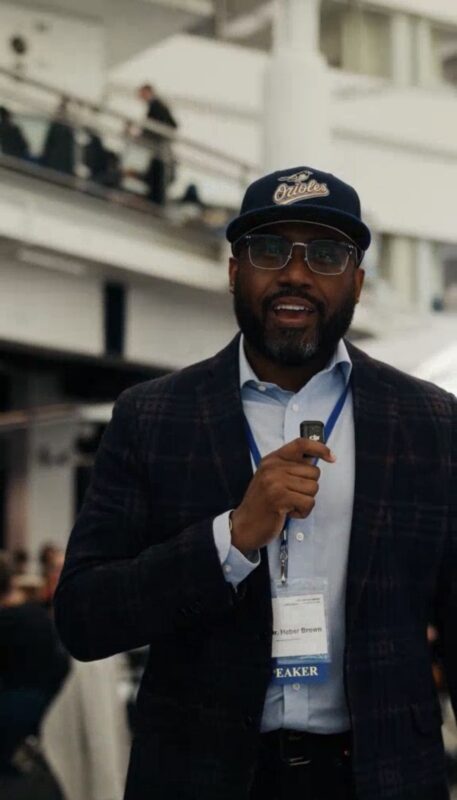
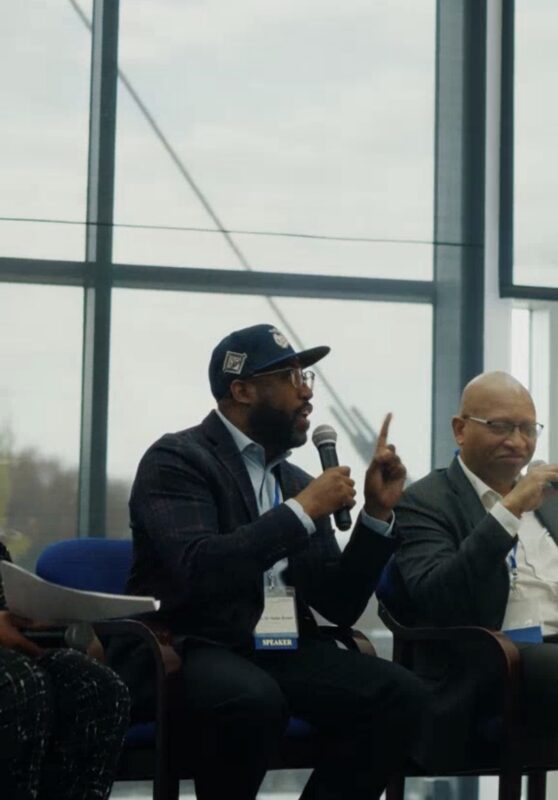
BCFSN founder and executive director Rev. Dr. Heber Brown III was among the speakers leading this year’s lineup. He shared the stage with environmental justice leaders including Dr. Sacoby Wilson of the Center for Community Engagement, Environmental Justice, and Health; Vernice Miller-Travis of Metropolitan Group; Aneca Atkinson of the Maryland Department of the Environment; and Dr. David Padgett of the HBCU Environmental Justice Technical Collaborative. The day opened with a fireside chat featuring Meghan Conklin, Maryland’s first Chief Sustainability Officer.
Rev. Brown brought some fire to the summit, speaking on a panel about food security, food sovereignty and environmental justice. His charge to everyone in the room was simple: take it personal. Take it personal when a data center wants to build in your backyard. Take it personal when corporations poison the water where you live and work. Take it personal when the air in your neighborhood is making our children and elders sick.
As he put it, when someone messes with your family, you get ready to fight. The choices being made about our air, water and soil today will shape the lives our grandchildren inherit, so this is about our family too. Now it is time to roll up our sleeves and do the hard work that lasting change requires.
Climate conversations often focus on energy, emissions and policy. Those matter. But for many families in Baltimore, climate shows up first in the price of groceries, the heat on their block, and the air their children breathe. Black churches have been meeting those needs for generations. When congregations grow food, protect land and organize neighbors, they are building climate resilience from the ground up.
Throughout the day, our booth welcomed volunteers, advocates, students, agency staff, faith leaders and potential collaborators who wanted to learn how food, faith and climate connect, and how their own congregations and communities can get involved.
The Climate Summit closed out a full season of community sponsorships for BCFSN. In one week, we hosted booths at People Over Data Centers, the TKN Leadership Summit at Kingdom Fellowship AME Church, and the Greater Baltimore Climate Summit. At each one, we connected with volunteers, advocates and collaborators who share our vision. Each event reached a different audience, but the message was the same: the Church has a role to play in protecting land, water and food for the people who need it most.
Thank you to Cari Harris, the CCT Foundation, The Butterfly Effect, and the entire host committee for convening this space for Greater Baltimore, and for welcoming BCFSN as a partner.
Want to bring this conversation to your congregation? Connect with BCFSN and follow along on Instagram at @blackchurchfsn.
