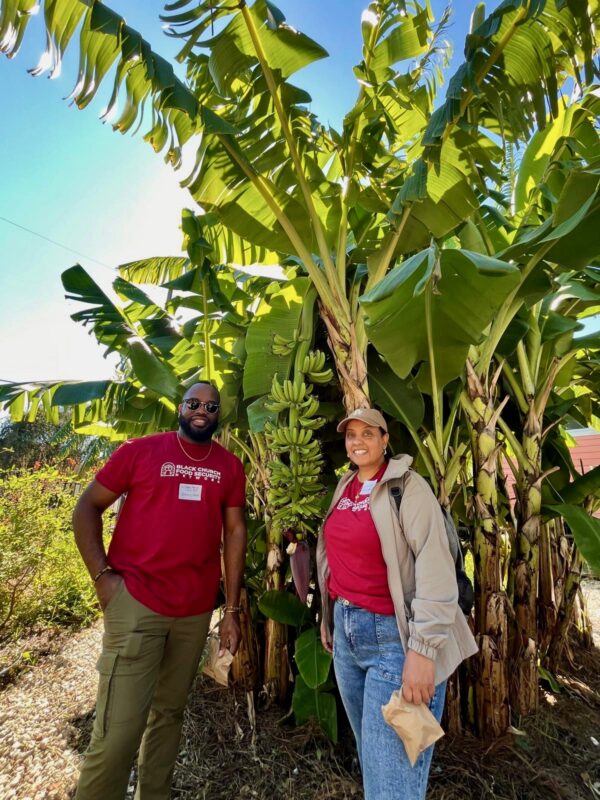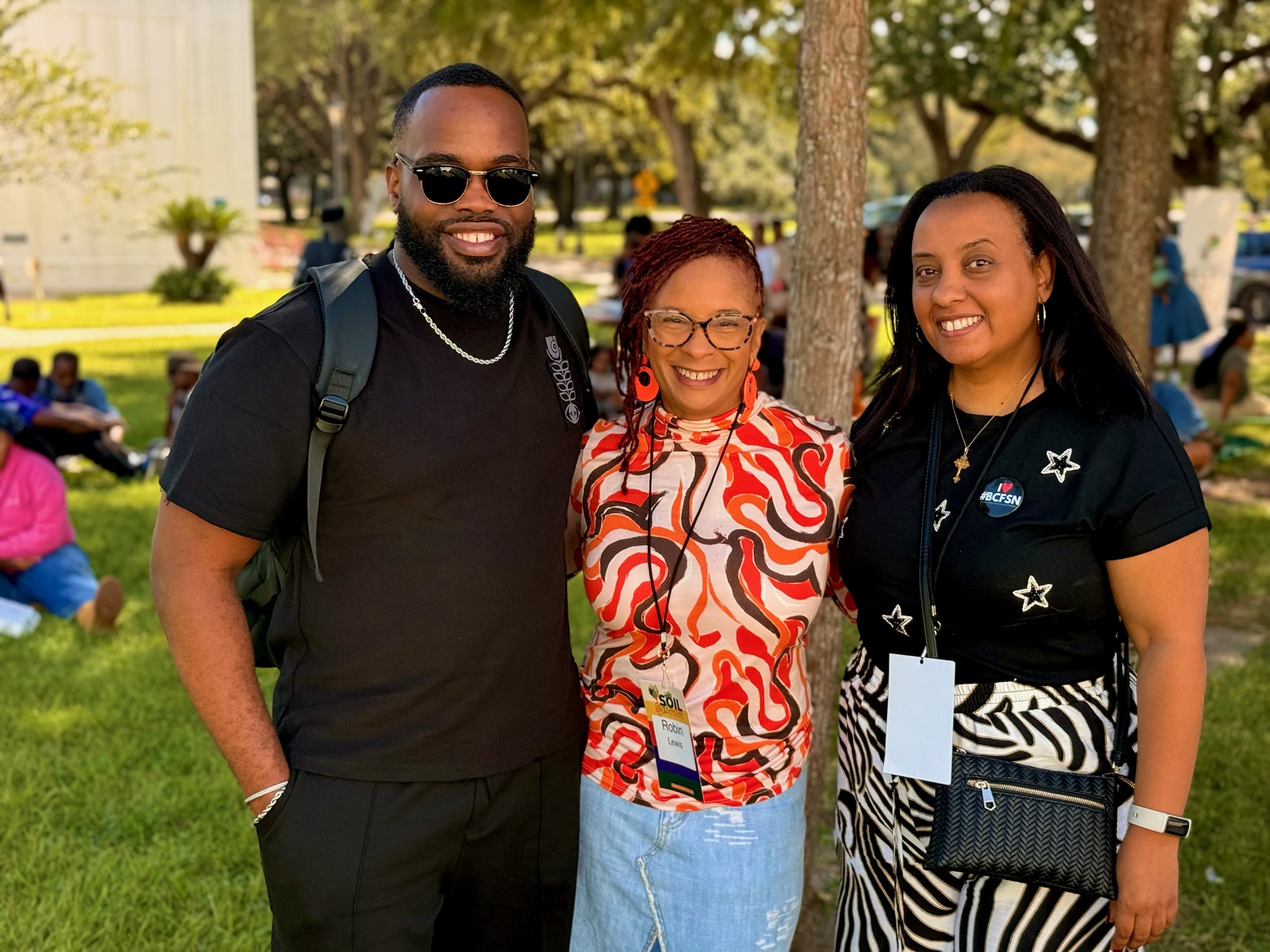
Last weekend, my colleague Yekatit Bezooayehu and I traveled to New Orleans to represent the Black Church Food Security Network at the 2026 Black Farmers and Urban Gardeners (BUGs) Conference, held October 23 to 25 at Dillard University. We came home full. Full of hope, information, clarity, and conviction, and honestly, full of gumbo too.
This year’s theme was Soil as Sanctuary: Cultivating Culture, Community, and Change. It could not have found a better home. New Orleans carries a rich legacy of Black history, culture, food, music, faith, and spirit, and every part of the weekend moved in rhythm with the city around it.
The room itself told the story. Farmers, gardeners, advocates, educators, nutritionists, mentors, managers, and leaders filled the space. Some had been working the land for decades. Others were just getting their hands dirty. But everyone was grounded in the same call: the stewardship, preservation, and care of the earth, the soil, our nourishment, and our people.
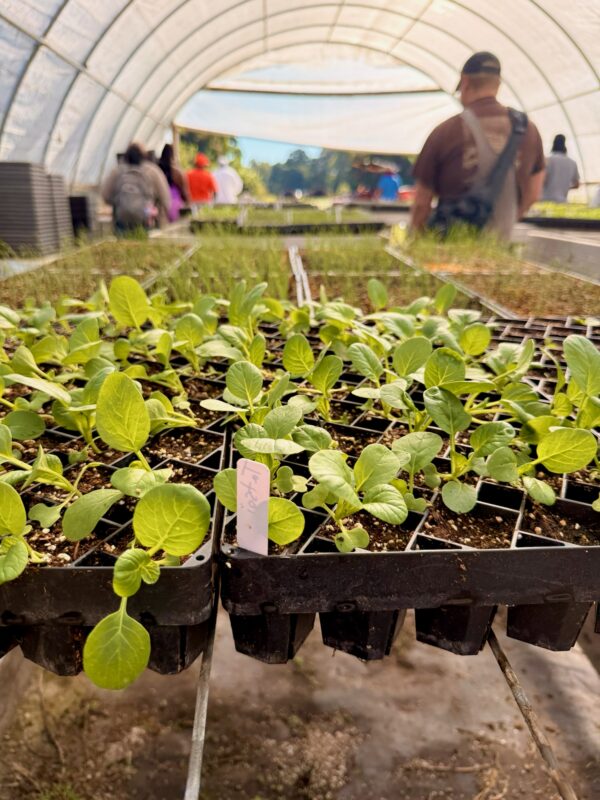
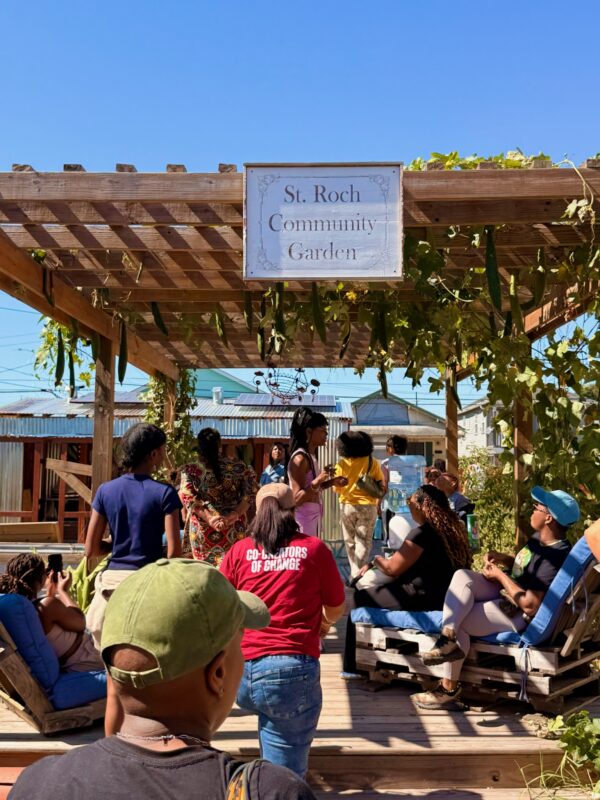
The farm tours brought the theme to life. At St. Roch Community Garden, Farmacia Wellness Center, and Grow Dat, we watched youth, young adults, and seasoned farmers working side by side. They were cultivating the ground, and in the process, cultivating community.
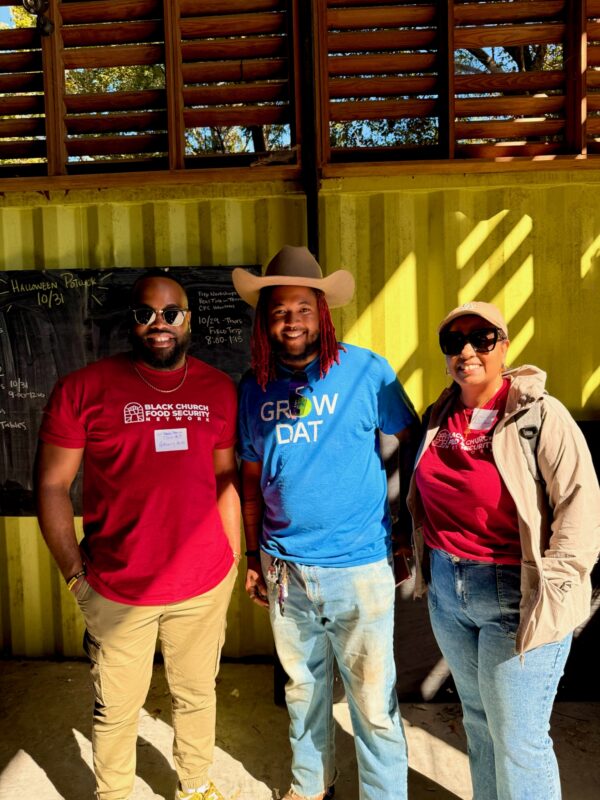
At Grow Dat, we were welcomed by Glen McKinney (featured in the photo), the farm’s Farm Coordinator. Glen walked us through the land and the rhythms of the work, and you could feel his care for both the soil and the young people who tend it. Spending time with him was a picture of what faithful stewardship looks like day to day.
What stayed with me most was seeing children welcomed into these spaces. Under the shade of the trees, among the flowers and vegetables (and yes, a snowball or two), they were safe. A child could pick up a book in the garden and read for a while. Another could find a task on the farm’s exploration wall and spend a moment doing something meaningful and calm. That is what sanctuary looks like. Not only a building with a steeple, but a patch of ground where a young person can breathe, belong, and grow. We also came to learn, and the conference gave us plenty of ways to sharpen the tools we use every day. Some of that happened in the workshops and breakout groups. Just as much happened in the informal moments: chatter over lunch, long conversations over bowls of gumbo, and swapping notes with people doing similar work in other cities. We took time to reflect on our work while touring the New Orleans African American Museum, a reminder that the ground we tend is layered with the stories of those who came before us. And we celebrated. We danced with our community of accomplices and co-creators of the food ecosystem, because joy is part of this work too.
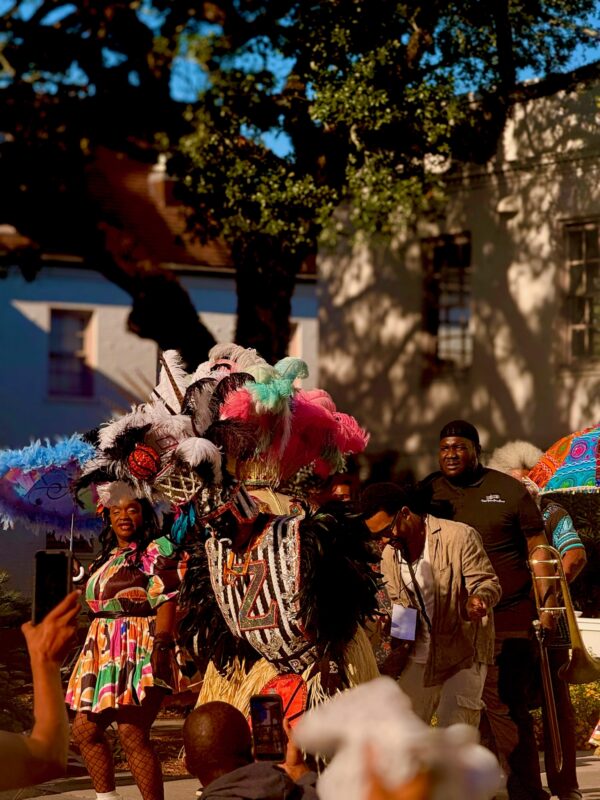
The weekend opened the only way New Orleans could: with a second line, moving us into the conference with music and celebration. It closed with the National Black Food and Justice Alliance (NBFJA) leading a deep dive into building regional food systems.
That closing conversation asked a big question. How do we create better pathways for everyone in this movement to engage? Black farmers, land stewards, growers, earth lovers, organizers, cultural workers, activists, street scholars, freedom fighters, academics, culinary artists, and everyday community members all have a role. Regional food systems are one way to connect those roles into something stronger than any of us could build alone.
At BCFSN, we believe the church has always been more than a sanctuary of worship. It can be a place of nourishment, healing, and land stewardship. BUGs reminded us that the soil can be a sanctuary too, and that the work of connecting congregations and farmers is part of a much larger family across the country. Yekatit and I are bringing home new ideas, new relationships, and renewed conviction. We are grateful to Black Urban Growers for convening us, to the farms and organizations of New Orleans for opening their gates, and to everyone who shared a meal, a story, or a dance with us.
The work continues, and we are not doing it alone. If your congregation is ready to treat its land as sanctuary and partner with Black farmers in your region, connect with BCFSN and follow along on Instagram at @blackchurchfsn. Let’s grow together.